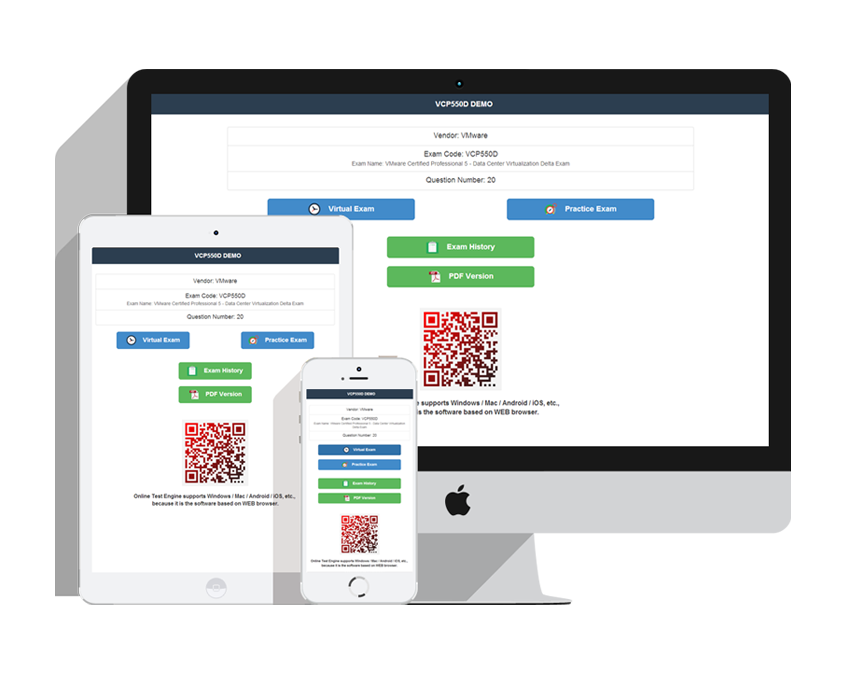
Convenient for reading
Unlike other products in this field, AI-500 online test engine can be downloaded into three kinds, namely, the online version of App, PDF version, software version. Generally speaking, these Designing and Implementing Multi-Agent AI Solutions free pdf study covers an all-round scale, which makes it available to all of you who use it whether you are officer workers or students. You can choose whichever you are keen on to your heart's content. And every version will be quite convenient for you to read and do exercises.
To sum up, Designing and Implementing Multi-Agent AI Solutions exam training torrent really does good to help you pass real exam. It is a right choice for whoever has great ambition for success. With so many benefits mentioned above, do you have a flash to buy it? If so, do have a try. Actions speak louder than words. I can assure you that you will be fascinated with it after a smile glance at it. The value of Microsoft Designing and Implementing Multi-Agent AI Solutions exam prep vce will be testified by the degree of your satisfaction.
Microsoft AI-500 braindumps Instant Download: Our system will send you the AI-500 braindumps file you purchase in mailbox in a minute after payment. (If not received within 12 hours, please contact us. Note: don't forget to check your spam.)
Refund
When it comes to refund, maybe some people will put forward the question whether Microsoft Designing and Implementing Multi-Agent AI Solutions exam training torrent will honor its commitments to refund or how much it will refund. About this question, I can give a definite answer that it is true that you will receive a full refund if you don’t pass the exam for the first time on condition that you show your failed certification report to prove what you have claimed is 100% true. Microsoft Designing and Implementing Multi-Agent AI Solutions latest pdf vce also have another plan which specially offers chances for you to choose other question banks for free.
There is no doubt that there are thousands of question banks of Designing and Implementing Multi-Agent AI Solutions exam study guide on the Internet, competing for the sales volume and performance. Therefore, the better they are, the more clients they will have. However, most of them just try as hard as possible to drum up more customers but indeed they don’t attach much attention to the improvement of products, which makes lapse into a vicious circle: low quality and low sales volume. Microsoft Designing and Implementing Multi-Agent AI Solutions PDF prep material, however, give high priority to its quality, devoting itself wholeheartedly to better cater to the demand of customers. As for its shining points, there is really a long list to say, involving refund, free renewal, convenience for reading, to name but a few.

Free renewal
As most of customers have great liking for large amounts of information, Designing and Implementing Multi-Agent AI Solutions free pdf study provides free renewal in one year after purchase to cater to the demand of them. The Designing and Implementing Multi-Agent AI Solutions renewed question has inevitably injected exuberant vitality to Designing and Implementing Multi-Agent AI Solutions test practice simulator, which is well received by the general clients. In addition, customers can enjoy a 50% discount as a regular client. It is really profitably, isn’t it?
Microsoft AI-500 Exam Syllabus Topics:
| Section | Weight | Objectives |
|---|---|---|
| Secure, govern, and deploy multi-agent solutions | 20-25% | - Deploy multi-agent solutions to Azure
|
| Develop multi-agent solutions in Azure | 30-35% | - Design and implement advanced prompt engineering strategies
|
| Evaluate, optimize, and monitor multi-agent solutions | 20-25% | - Design and implement evaluation and validation strategies
|
| Architect multi-agent solutions | 15-20% | - Specify technology components for multi-agent solutions
|
Microsoft Designing and Implementing Multi-Agent AI Solutions Sample Questions:
You have a Microsoft Agent Framework workflow. The workflow includes three specialized agents that wrap custom Hugging Face Transformers pipelines for Personally Identifiable Information (P(l) detection, sentiment classification, and summarization Each ticket must be processed by the Pll detection agent first. The sentiment classification agent must receive the redacted ticket text. The summarization agent must receive both the redacted text and the sentiment result You need to coordinate the agents to meet the dependencies.
Which orchestration pattern should you use?
- A. handoff
- B. sequential
- C. group chat
- D. concurrent
Correct Answer: B 🗳️
Explanation: Only visible for Actual4Exams members. You can sign-up / login (it's free).
You have a Microsoft Foundry agent that handles customer support chats. The agent has two tools named get_contract_terms and calculate_refund.
On turns where refunds must be calculated, the agent inconsistently calls the tools.
You need to reliably force refund-estimate turns to call calculate_refund.
Which request configuration should you use?
- A. tool_choice: { " type " : " function " , " function " : { " name " : " calculate_refund " }}
- B. instructions: " Use calculate_refund for refund estimates. "
- C. tool_choice: " auto "
- D. tool_choice: " required "
Correct Answer: A 🗳️
Explanation: Only visible for Actual4Exams members. You can sign-up / login (it's free).
You have a Microsoft Foundry agent built by using LangGraph. The agent retrieves policy content from a vector store. The LangGraph orchestration runs in Azure Container Apps, and the operations team uses Azure Monitor to inspect agent runs.
You discover that the vector store is sometimes unreachable during Azure regional maintenance windows You need to configure the tool ecosystem to ensure that the agent can answer policy questions during outages The solution must meet the following requirements:
* Use the project vector store without adding a local retrieval node for the primary path.
* Run the cached-policy lookup in the same compute environment as the LangGraph code.
* Emit agent, model, and tool spans that can be inspected in Azure Monitor How should you configure the tool ecosystem? To answer, select the appropriate options in the answer area.
NOTE: Each correct selection is worth one point.
Correct Answer:

Explanation:
Corpus access: AgentServiceBaseTool wrapping FileSearchTool; Outage fallback: No listed option fully satisfies the requirement to run the cached-policy lookup in the same Azure Container Apps compute; Telemetry: AzureAIOpenTelemetryTracer added as callbacks.
Current Microsoft LangGraph integration guidance supports wrapping Foundry ' s FileSearchTool through AgentServiceBaseTool for the primary project-vector-store path and attaching AzureAIOpenTelemetryTracer through LangGraph callbacks for OpenTelemetry traces. The problematic part is the proposed outage fallback. Code Interpreter is a Foundry-hosted built-in tool, so it does not execute in the same Azure Container Apps compute environment as the LangGraph application. That means a CodeInterpreterTool- based fallback cannot satisfy the explicit same-compute requirement. A technically correct design would use a local LangGraph/LangChain callable or tool over cached policy content mounted or stored with the Container Apps workload. Because that local-tool option is absent from the answer set, there is no fully valid listed selection for the fallback row. The updated answer therefore preserves the two valid selections and explicitly identifies the missing valid option rather than endorsing an inconsistent one. The implementation should also preserve clear inputs and outputs around this step so that later agents receive only the information they require. This improves debuggability and keeps token, permission, and state growth under control as the workflow becomes more complex.
Official Microsoft reference: Microsoft Foundry - develop LangChain/LangGraph agents
HOTSPOT -
You have a multi-agent solution in a Microsoft Foundry project. The project is connected to an Application Insights resource.
You have the following code that implements tracing.
For each of the following statements, select Yes if the statement is true. Otherwise, select No.
NOTE: Each correct selection is worth one point.
Correct Answer:

Explanation:
No / No / Yes
The first statement is false because content recording is explicitly disabled, so prompt and generated response text are not stored as GenAI span content attributes even though tracing remains active. The second is false because the OpenAI client is obtained before trace-context propagation is enabled; Microsoft documents that clients created before the instrumentation change are not retroactively configured for that propagation behavior. The third statement is true because the tracing decorator for ordinary functions records supported function parameters as `code.function.parameter. < name > ` attributes. Those parameter attributes are separate from GenAI prompt-content recording, so disabling message content does not suppress them.
Consequently `email` and `loyalty_tier` can appear on the `lookup_customer` span. The correct sequence is No, No, Yes. The evaluation should also preserve correlation identifiers and version information where possible so a failed score can be traced back to the exact agent, model, tool call, or retrieval step that produced it. This turns the metric into an actionable diagnostic rather than only a dashboard number.
Official Microsoft reference: Microsoft Foundry - client-side agent tracing
You have a Microsoft Foundry agent that completes benefits enrollment during a single user conversation The agent collects the required enrollment fields during 15 turns. Users can correct earlier values before final submission. The current implementation sends the complete transcript with every model request.
You need to change the context accumulation strategy for the active enrollment. The solution must meet the following requirements:
* Preserve the latest value for each required enrollment field until submission.
* Bound the maximum number of tokens sent with each model request
* Preserve user corrections until submission.
* Prevent durable cross-session memory.
What should you do?
- A. Use conversation-scoped, server-managed history with automatic input truncation.
- B. Use a selective summarization of older low-value conversation turns.
- C. Use an enrollment-state snapshot with a recent-turn sliding window
- D. Use response chaining with a fixed number of previous responses, relying on the conversation history to preserve the enrollment field values.
Correct Answer: C 🗳️
Explanation: Only visible for Actual4Exams members. You can sign-up / login (it's free).

No help, Full refund!
Actual4Exams confidently stands behind all its offerings by giving Unconditional "No help, Full refund" Guarantee. Since the time our operations started we have never seen people report failure in the Microsoft AI-500 exam after using our products. With this feedback we can assure you of the benefits that you will get from our products and the high probability of clearing the AI-500 exam.
We still understand the effort, time, and money you will invest in preparing for your certification exam, which makes failure in the Microsoft AI-500 exam really painful and disappointing. Although we cannot reduce your pain and disappointment but we can certainly share with you the financial loss.
This means that if due to any reason you are not able to pass the AI-500 actual exam even after using our product, we will reimburse the full amount you spent on our products. you just need to mail us your score report along with your account information to address listed below within 7 days after your unqualified certificate came out.